
Last Updated on April 5, 2026
The Great Migration, Africa’s grandest natural wonder, is one of the most dramatic wildlife spectacles on Earth. If you’ve seen the images of thousands of wildebeest plunging into crocodile-filled rivers or herds stretching endlessly across golden plains dominating travel brochures and documentaries, then it’s no surprise you’d arrive in the Serengeti or Maasai Mara expecting constant action. But the reality? That’s not always the case.
The Wildebeest Migration doesn’t involve nonstop dramatic moments. It’s actually a slow, circular movement, primarily driven by seasonal changes, grazing patterns, and instinct. Yes, it’s a series of events with iconic wildlife moments, but they are unpredictable, and long stretches of quiet are something you’ll experience. Once you understand this reality, you’ll completely change how you witness this incredible spectacle.
What the Great Migration Is Really Like
It’s Not a Show, It’s a Movement
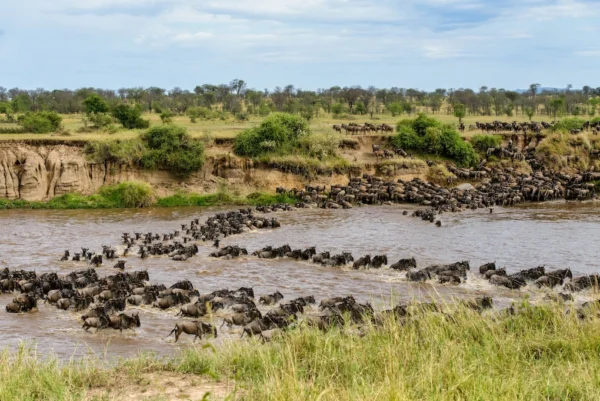
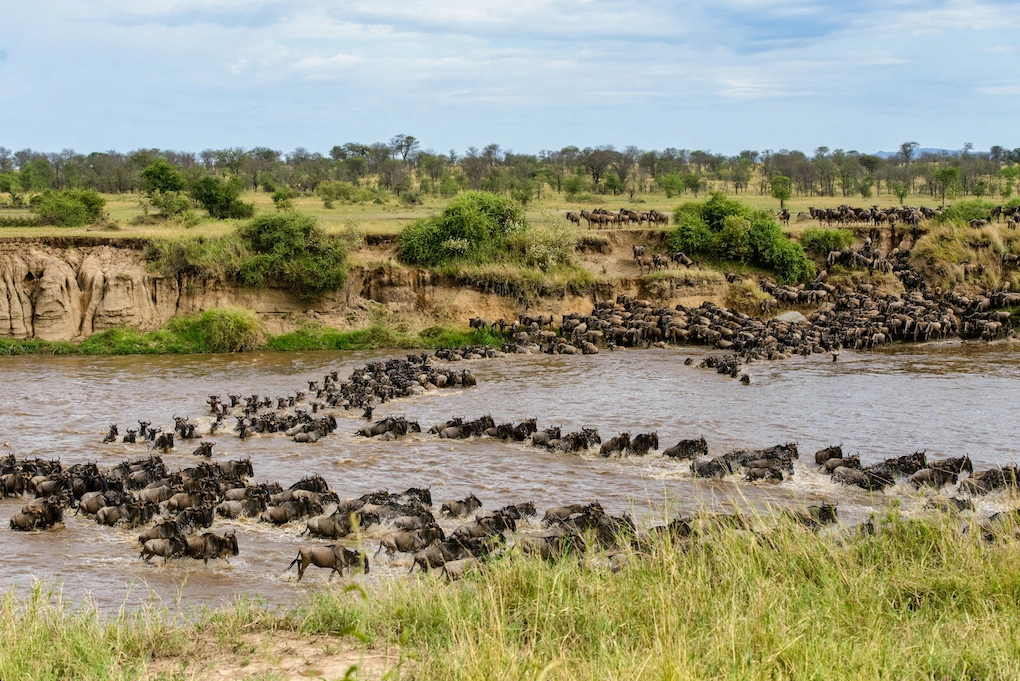
At its core, the Great Migration is exactly what the name suggests: a migration. It involves more than 1.5 million wildebeest, accompanied by hundreds of thousands of zebras and gazelles, moving in a circular motion between Tanzania’s Serengeti and Kenya’s Maasai Mara in search of greener pasture.
They don’t have a fixed schedule for this; they move when they have to, when conditions demand that they do.
So, on your trip, don’t expect a “performance.” The magic comes when you let it unfold on its own, at its own pace. You’ll have varying experiences; some days you’ll witness an intense predator activity. And other days, you might not see any action; they might just be resting under the heat of the sun.
If you’re expecting to experience constant motion and intensity, it can feel surprisingly uneventful.
Related post: Is the Great Migration Overrated? Top 5 Experiences that Prove It’s Worth It
The Drama Is There, But It’s Rare
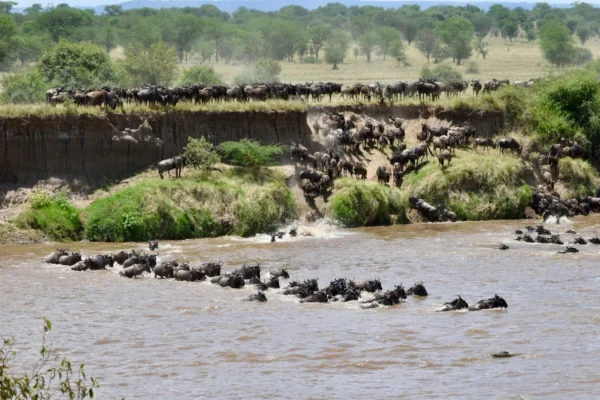
The dramatic scenes, from the river crossings to predator chases and dense herds on the move, happen, just not all the time. The Mara River crossings, often considered the main highlight of the migration, might last only a few minutes. And that’s after you’ve probably waited for hours or days.
The animals can gather at the riverbank for hours, sometimes longer, hesitant to jump into the crocodile-infested waters. Then suddenly, without warning, a few leap, and the rest follow in a chaotic rush. Within a few moments, it’s over. And they can also spend all that time gathering at the river banks, only to change their minds and move elsewhere. So, it’s never a sure bet to see the ‘drama.’ In fact, a crossing might not happen at all on a given day. If you’re not in the right place at the right time, you may miss it entirely.
It’s the same thing with predator action. Yes, the lions, cheetahs, and hyenas are always after the herds, but hunts are not guaranteed. In fact, you might be surprised to see the predators resting most of the time, conserving energy for when the opportunity arises.
Expect Long Periods of Stillness
One aspect of the Great Migration that most people overlook is how quiet it can be. You might spend hours driving through the plains, seeing scattered groups of animals grazing with little urgency. The atmosphere is calm, and for many first-time visitors, this can be unexpected and definitely disappointing. But this stillness is actually a vital part of the Wildebeest Migration. The movement is driven by survival, not spectacle. Animals graze, rest, and move gradually. These slower moments sustain the herds and allow the dramatic events to happen at all.
So, Is the Great Migration Always Dramatic?
No, it’s not. It’s a natural process that comes with both intense moments and long, quiet moments. The drama is a highlight, but it’s not what it’s all about. And perhaps that’s what makes it a worthwhile experience. Because when those dramatic moments occur, they feel raw and unforgettable. Not because they are constant, but because they are rare.
Related post: What a Bad Safari Day in Maasai Mara Looks Like (And Why It’s Still Worth It)
How To Make the Most of Your Great Migration Experience
Timing changes everything
The experience of the Great Migration depends heavily on when and where you visit.
From January to March, the calving season takes place in the southern Serengeti. Over half a million calves are born within a few weeks. While opportunistic predators often take advantage of the abundance, the overall atmosphere remains calm, with animals spreading across open plains. If you are wondering how to visit Serengeti without crowds, consider travelling during the calving season.
The herds start moving north between April and June. At this time of year, the movement is less concentrated and harder to predict.
The famous river crossings typically occur between July and October in the Maasai Mara and northern Serengeti. This is when the chances of witnessing the dramatic scenes are highest, but even then, nothing is guaranteed.
Even outside peak moments, the Great Migration continues, just in a quieter, less visible way.
Know what to expect before you go
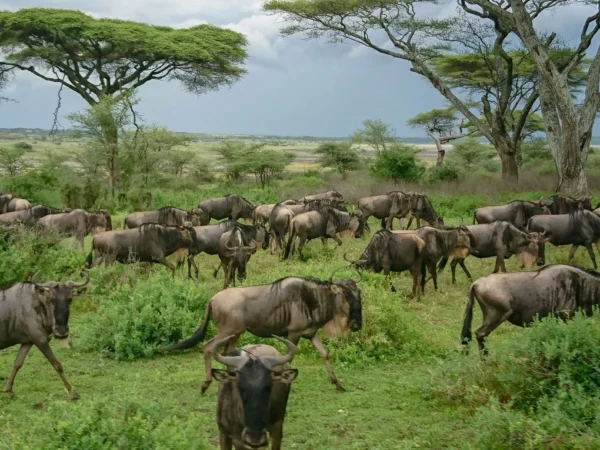
Many vacationers to the Maasai Mara or Serengeti have expectations shaped by the scenes they see in documentaries, on social media, and in travel marketing. What many fail to understand is that these sources depict the migration differently. They only show the dramatic, intense, and most striking moments of the circular motion.
They don’t show you the waiting, the long drives, the quiet hours, or the unpredictable nature of the spectacle. Because of this, most travellers feel like something is missing when reality doesn’t match their expectations. But this is how nature works, and the more you accept and let things unfold naturally, the more rewarding your experience will be.
A shift in perspective can make a world of difference
When you shift your perspective, the Great Migration becomes more than just dramatic moments. You begin to observe the landscape slowly. How the herds move in unity. How predators follow at a distance. You begin to notice and appreciate the scale of it all, including the smallest details. Not just the dramatic moments.