
Last Updated on February 5, 2026
Akagera National Park was created in 1934 by the Belgian colonial government. This makes it one of the oldest national parks in Africa. Seeing the wealth of outdoor offerings it has today, from breathtaking landscapes to bucket-list worthy hidden gems, it’s hard to believe it was almost lost entirely.
Through strong leadership, community engagement, and effective administration, the park has been transformed from a poaching hotspot to a diverse, thriving ecosystem, hosting Rwanda’s only Big Five, and more. It’s the perfect example of African conservation that other places should emulate.
What’s the History of Akagera National Park?
Stretching across 433 square miles of space, Akagera National Park rests on Rwanda’s eastern reaches, near the Tanzanian border.
The colonial government established the park to protect wildlife and the incredibly unique and varied habitats, including Rwanda’s only savannah.
But due to the many years of violence, most notable being the Genocide against the Tutsi, the park has gone through some difficult times. It lost much of its wildlife, with a large portion of it turning into farmland.
Akagera National Park was merely surviving by the early 2000s.
Also Read: Luxury Africa Travel Finds a New Star in Rwanda’s Ultra-Exclusive Retreat
A Turning Point: Partnership and Protection

As soon as the Rwanda Development Board (RDB) entered a partnership with African Parks, a renowned biodiversity conservation non-profit focused on managing protected areas across the continent, everything changed for the better.
They came up with an effective strategy, which included:
- Improved security, which has helped end poaching, a significant challenge for the park’s wildlife. Among the security measures included building a 120 km fence on the park’s western boundary and recruiting expert rangers. Moreover, thanks to new technology, tools such as drones and GPS have helped to enhance park monitoring.
- Reintroducing wildlife. The park was committed to reintroducing wildlife, starting with lions in 2015, followed by Eastern black rhinos in 2017 and 2019, and then the Southern black rhinos in 2021. This remarkable comeback reestablished Akagera National Park as home to Africa’s Big Five.
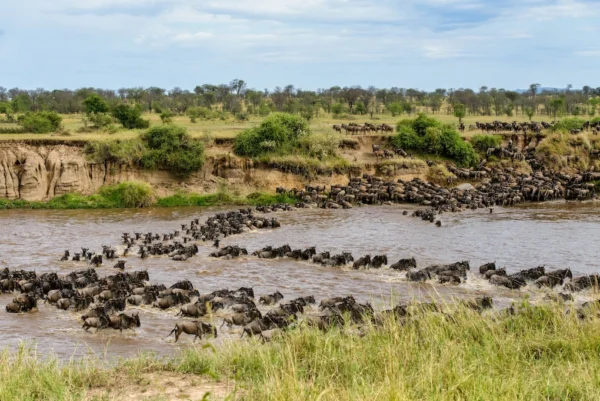
- Today, one of the most underrated safari destinations boasts more than 11,000 animals and is definitely worth considering over Botswana, especially if you are seeking a destination with a strong focus on conservation. Beyond the Big Five, it houses zebras, hippos, giraffes, and antelopes. Over 500 bird species also call this place home, making it a premier birdwatching destination in Africa. All this has been made possible by Rwanda’s conservation efforts.
- Involving nearby communities in conservation is a key component in the park’s restoration.
- Sustainable tourism. Through the partnership, the park has fully embraced ecotourism, with impressive developments, such as the Magashi Lodge, which serves as a source of livelihood for the local community and supports the local economy.
Balancing Conservation and Community Needs
Akagera’s successful conservation story is primarily built on the principle of inclusion, with the management creating programs that facilitate the safety of residents as they coexist with the park’s wildlife. These programs include:
- Livestock compensation schemes, like the Special Guarantee Fund (SGF), ensure compensation for all verifiable damages caused by the park’s wildlife.
- Environmental education is another key element of Akagera National Park’s conservation strategy. The goal is to ensure the locals understand the need for and cultivate long-term attitudes towards environmental conservation.
- Sustainable farming projects, which ensure the locals earn a livelihood without putting pressure on the park’s land.
By offering opportunities to earn a living outside the park, Rwanda has significantly reduced the risk of locals engaging in illegal activities, such as poaching, highlighting the deep connection between conservation and local communities.
Also Read: 10 Africa’s Most Dangerous Animals
A Conservation Model for Other African Nations

Akagera’s impressive restoration has drawn attention across Africa and beyond. The most important lesson learnt from this is that even degraded ecosystems can be brought back to life and thrive, as long as there is political will, effective management, and community involvement.
African Parks applied some of the lessons learnt from Rwanda’s successful conservation story to other parks across the continent. However, no country has done it like Rwanda so far.
Looking Ahead
Making Akagera National Park a model of sustainable tourism is Rwanda’s ultimate goal, where holidaymakers enjoy the park’s beauty without damaging its natural resources. The money they spend supports the protection and further development of the park, while also benefiting the local economy.
The park’s environmental conservation efforts and other clean operations continue to draw global attention. It is a significant symbol of Rwanda’s resilience and a living proof that effective conservation can revive both nature and communities.
About Akagera National Park

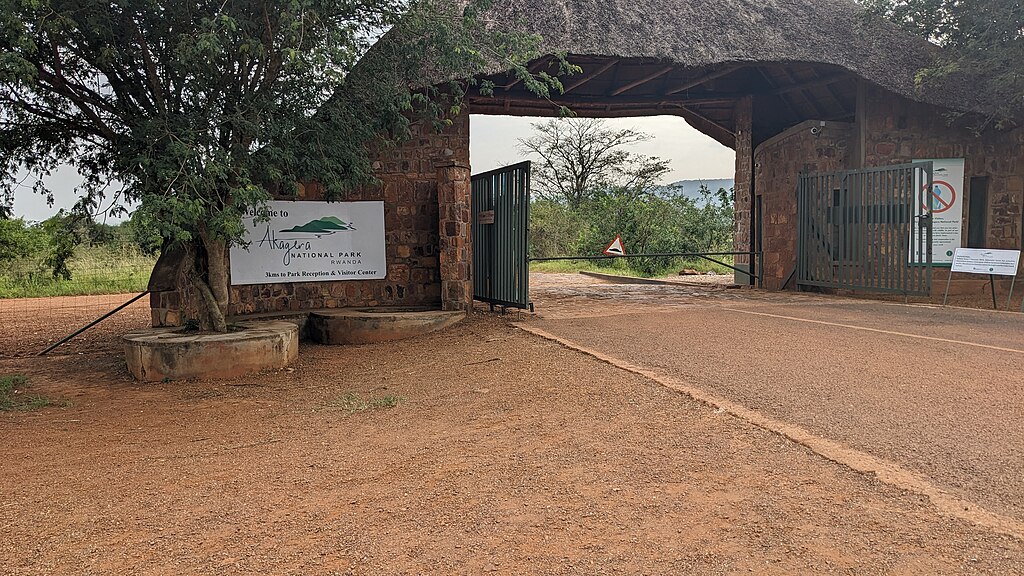
Ange Marie Gisele, CC BY-SA 4.0, via Wikimedia Commons
- Location: Eastern Rwanda, near Tanzania
- Size: 443 square miles
- Managed by: African Parks & Rwanda Development Board
- Wildlife: Big Five, giraffes, zebras, hippos, crocodiles, 500+ bird species
- Tourism: Game drives, boat safaris, birding, camping, night safaris
- Impact: Employment for locals, reduced poaching, restored ecosystems