
Last Updated on April 20, 2026
Africa is a continent of great diversity yet millions of tourists recognise it only as a place to go on safari and enjoy unique wildlife encounters. Beyond the famous adventures, such as the wonders of the Great Migration, it’s brimming with surprising, surreal, and unique features. From Mauritius’ Underwater Waterfall to Tanzania’s Petrifying Lake Natron, here are the 10 unusual natural phenomena you’ll find across Africa.
The Pink Lake Retba, Senegal
About 18.64 miles from Dakar is Lake Retba, one of the most surreal natural wonders in Africa. It’s known for its vibrant pink colour, caused by the Dunaliella salina bacteria, which feed on the lake’s high salt content, which is up to 40% in some portions, and release a pink pigment to absorb sunlight. Because of the extreme salt, people can float in the lake easily.
The Underwater Waterfall of Mauritius
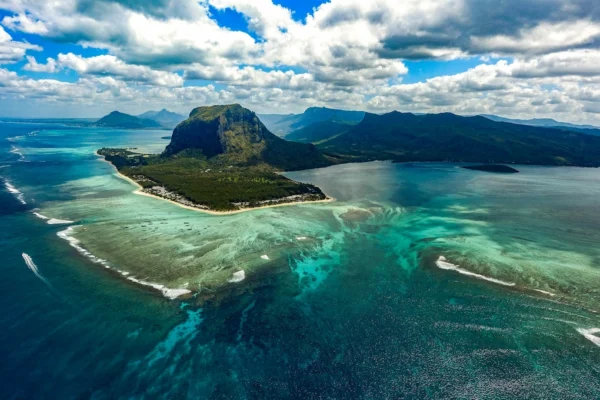
Lying over 1200 miles off Africa’s southeast coast and east of Madagascar, Mauritius is the continent’s safest and most beautiful island. While its gorgeous beaches get all the fame, it’s also home to one of the world’s most unique natural wonders: an underwater ‘waterfall’, just off Le Morne Peninsula.
If you haven’t heard of it, the phrase ‘underwater waterfall’ might be confusing. Well, it’s not really a waterfall of water cascading under water. It’s actually an optical illusion formed when sand and silt are carried away by ocean currents into deep waters, making it seem it’s an ‘underwater waterfall’.
To see this one-of-a-kind gift from Mother Nature, you can book a helicopter tour for a bird ’s-eye view. Alternatively, you can hike the 500-meter Le Morne Brabant. Swimmers and divers can get there too, but you should be careful of the strong currents.
The White Lions
White lions are some of the rarest animals in Africa. They are located in Southern Africa, specifically in the Timbavati Private Nature Reserve, which borders Kruger National Park, one of the top places to enjoy a classic African safari. These lions are white, not because of albinism, but due to leucism, a rare gene mutation that leads to reduced pigmentation, resulting in white to blond fur.
The animals, however, come with the same eyes and skin colour as regular lions. In the region where they are found, Timbavati, which translates to ‘the place where something sacred came down to earth from the heavens,’ they are seen as sacred and divine.
Related post: Exploring Africa on a Cruise: Pros, Cons, and Destinations for 2026
Melanistic Serval
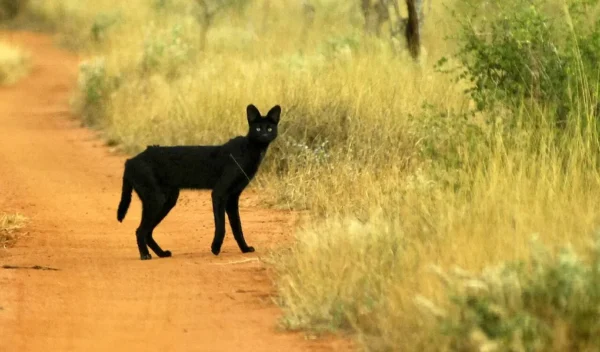
Africa is home to many unique creatures, including the endemic species of Northern Kenya. But the Melanistic serval, primarily found in Tanzania’s Mt Kilimanjaro and Kenya’s Aberdare Mountains, is among the most unusual natural phenomena you’ll find across Africa. A typical serval is spotted; this rare, jet-black variant is a result of a recessive gene that releases excessive black pigment (melanism).
While the spots may be visible when lighting conditions allow, these creatures are nearly entirely black. However, they behave just like any other serval; nocturnal, depending on their unique adaptations, such as extreme stealth, high agility, and exceptional hearing to catch their prey (usually frogs, rodents, insects, and birds).
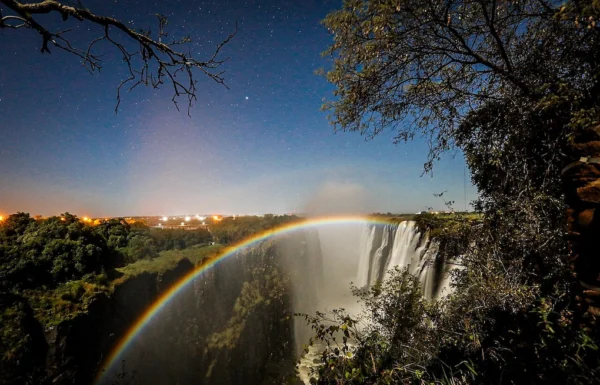
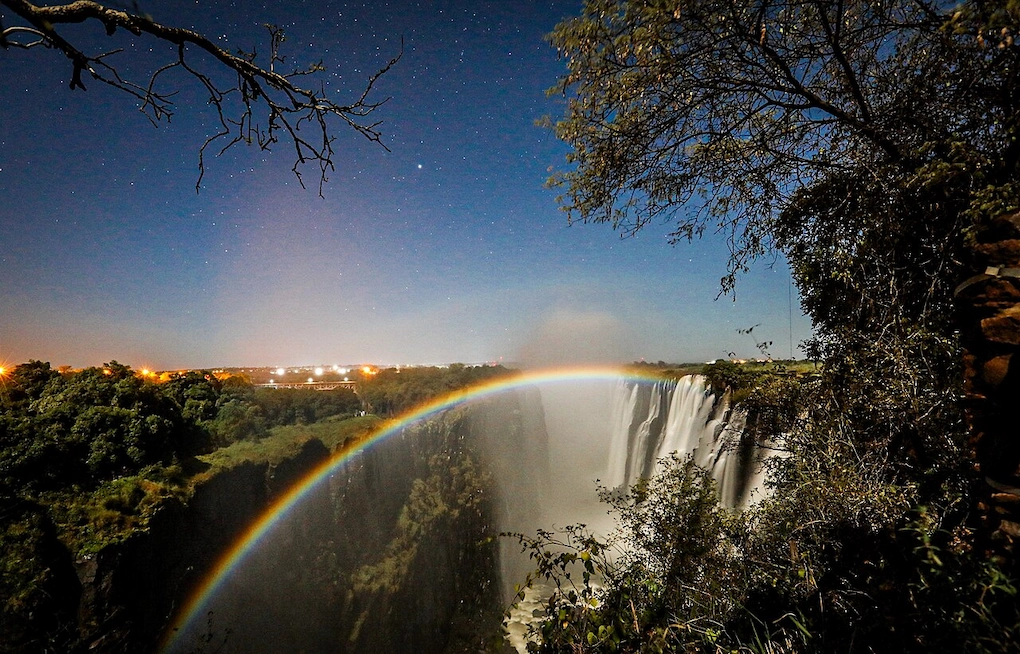
Moonbow, Zambia/Zimbabwe
One of the natural phenomena that seem supernatural, a moonbow is a rainbow created by moonlight rather than sunlight. The arcs appear ghostly white, and they are so rare that you can live your whole life without ever seeing any.
For these unique arcs to appear, there should be a full moon, which should be low in the sky and directly behind the observer (and the mist in front). And the sky must be very dark. They are often seen in Victoria Falls, one of Africa’s most beautiful places to visit at least once.
The Marshes of Deadvlei, Namibia
Deadvlei translates to ‘dead marshes.’ Located in the heart of Namib-Naukluft National Park, it’s found between the towering dunes of Sossusvlei, some of the highest dunes in the world (over 1300 feet). How did one of the strangest places in Africa come to be?
The pan was actually a lush oasis, with water from the Tsauchab River enabling the trees, which are estimated to be 900 years old, to grow and flourish. But things changed when a severe drought hit the area and the sand dunes encroached, cutting off water from reaching the oasis.
As a result, it dried up. And that’s how Deadvlei was formed. The area’s climate is so arid and hot that the trees can’t even decompose.
Ol Doinyo Lengai, Tanzania
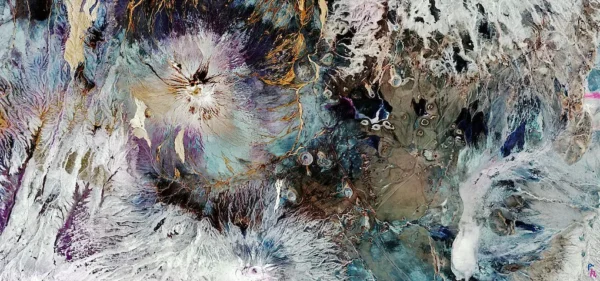
Ol Doinyo Lengai is considered the world’s strangest volcano. It’s the only active volcano releasing natrocarbonatite lava, which is rich in sodium, calcium, and carbon dioxide instead of silica, found in all other volcanoes.
Additionally, it erupts at 500-600°C, making it the ‘coolest’ lava on Earth, and it is extremely fluid. It’s black or brown when hot, turning white after cooling down. Towering at an elevation of approximately 9,482 feet, its name is a Maasai term, which translates to ‘the Mountain of God.’
Related post: Kenya Vs Tanzania: Which is Better for Safari?
The Petrifying Lake Natron, Tanzania
Just below the Ol Doinyo Lengai is the Petrifying Lake Natron, which gained international recognition when a photographer, Nick Brandt, captured and released eerie pictures of dead animals turned into stone-like statues. These pictures led people to believe that the lake calcifies living creatures when they come in contact with it.
But that’s not what happens. The animals actually die natural deaths, and when they fall into the lake, the extreme acidity, which is because of the high chemical composition flowing down from Ol Doinyo Lengai, preserves them, giving them a hardened, mummified statue look. The lake is dubbed a ‘deadly’ lake, but even with the harsh chemicals, it’s actually a breeding ground for the iconic bird species, the Lesser Flamingos, which depend on the algae blooms.
The World’s Fastest Lava on Mount Nyiragongo, DRC
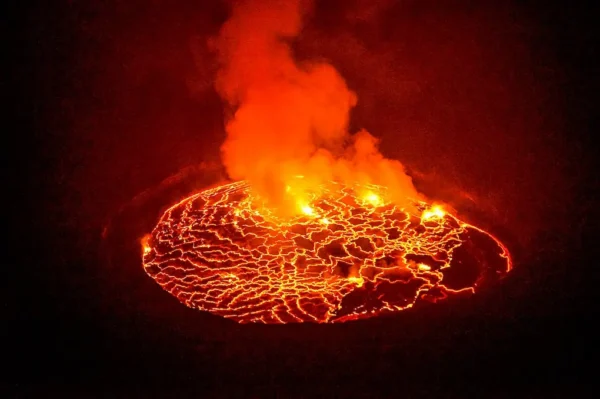
One of the most remarkable and unusual natural phenomena you’ll find across Africa is Mount Nyiragongo near Lake Kivu, within Virunga National Park. The mountain’s lava is the world’s fastest, flowing at a speed of up to 60 mph, which is enough to catch up to vehicles as it occurred in the 1977 and 2002 eruptions.
The beautiful city of Goma has frequently suffered destruction as a result of Nyiragongo’s fluid lava. Hiking to the summit, which costs 4-8 hours, is one of the coolest things to do in Congo, but since it’s steep and has loose volcanic rock, it’s advisable to be in the company of a well-experienced guide, especially for beginners.