

Last Updated on July 7, 2026
Nairobi is one of Africa’s most beautiful places to visit at least once. In addition to its bustling city center, it offers impressive outdoor experiences, including unique wildlife encounters at Nairobi National Park, the only urban national park in the world, and one of the best things to do in Kenya. The city offers many incredible attractions, including deep cultural immersion at the Bomas of Kenya. But if you are looking to unwind, there’s no better place than Karura Forest, about 15 minutes from the CBD. It’s a scenic, recreational, and perfect place to escape the city’s bustling nature. Discover why Karura Forest is worth visiting.
What To Know About Karura Forest
It’s the capital’s largest green space
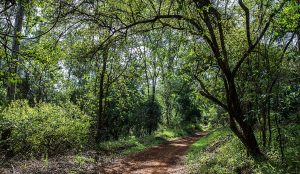
Stretching over 2,570 acres, Karura Forest is Nairobi’s largest green area and one of the world’s largest urban forests. However, the forest is more than a green, open space for breathing fresh air; it’s a great symbol of environmental conservation and activism. Wangari Maathai, the late Nobel Peace Prize Winner, is notable for leading the Green Belt Movement against the encroachment of the forest. The green oasis is jointly managed by the Kenya Forest Service (KFS) and the Friends of Karura Forest (FKF).
It has six entrance points:
- Gate A: The forest’s primary entrance is off Limuru Road, just across the Belgian Embassy.
- Gate B: A service entrance; not accessible to the public
- Gate C: Also known as the “Sharks Gate,” this is a scenic forest trail that’s perfect for cyclists and tourists visiting with their furry friends. It’s on Kiambu Road, near the DCI offices, opposite Sharks Palace.
- Gate D: This pedestrian-only entrance is located at the end of the ICRAF access lane.
- Gate E: This gate is pedestrian-only and is on Limuru Road, opposite the main entrance.
- Gate F: The primary entrance to Karura Forest’s Sigria section.
Why Karura Forest is Worth Visiting
The forest is a scenic and peaceful escape for anyone seeking relaxation and outdoor recreation.
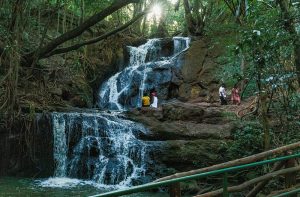
Karura Forest highlights:
- Karura Waterfall
- Lily Lake
- Mau Mau Caves
- Bamboo Grove
- Cedar Walk
With lush greenery, majestic waterfalls, and diverse plant and animal life, this forest is a beautiful, peaceful haven for relaxation. Within the forest, you’ll find 30+ miles of scenic nature trails:
- Sykes’ Monkey Trail Loop: This well-maintained trail has diverse scenery and highlights, including a waterfall and wildlife. It’s 2.98 miles long and takes one hour and 17 minutes to complete.
- Sykes’ Monkey – Family – Olive Path and Lake Trail: This trail is scenic, kid-friendly, and offers a chance to see monkeys. It covers 5.7 miles and takes two hours and 29 minutes to complete.
- Sykes’ Monkey and Lake Trail Loop: This is a beginner-friendly route with beautiful sights, including a waterfall. It covers 3.1 miles and takes one hour and 22 minutes to complete.
- Sykes’ Monkey and Fike Bikeshare Trail: This is a beautiful, peaceful hike with impressive features, including a waterfall and a cave. It is 7.02 miles long and takes three hours and four minutes to complete.
- Olive Path, Sykes’ Monkey, and Kfeet Track: A lovely trail through lush greenery and waterfalls. It stretches 4.1 miles and takes one hour and 49 minutes to complete.
Beyond hiking, cycling, picnicking under the canopy, and spelunking, there are other reasons why Karura Forest is worth visiting. The forest’s serene bamboo groves are ideal for yoga and meditation. And with 200+ bird species, it’s also a paradise for birdwatching enthusiasts, with the Bamboo Forest trails and Lily Lake offering unmatched viewing spots.
- Animals you’ll encounter: Syke’s monkeys, hares, bush pigs, Harvey’s Duiker, bushbucks, civets, and more.
- Birds: Ayres Hawk-eagle, the Silvery-cheeked Hornbill, the Narina Trogon, owls, African crowned eagle, and more.
It’s budget-friendly
Karura Forest is one of the cheapest places to visit in Nairobi, with an entrance fee only costing as follows:
- Kenyan citizen adult: KES 174
- Kenyan citizen child: KES 55
- Resident adult: KES 174
- Non-resident adult: KES 850
- Non-resident child: KES 450
- Parking: KES 295
- Picknicking: KES 150 per adult and KES 100 per child
Related post: 7-Day Kenya Itinerary: Safari, Culture, and Coastal Escapes
When Is The Best Time To Visit Karura Forest?
The dry season offers the best conditions for enjoying the great outdoors
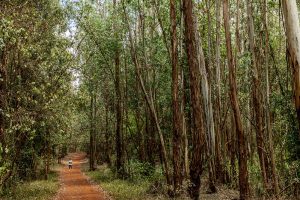
The best time to visit Karura Forest depends on what you plan to do there. Nairobi has two seasons: dry (January-March, July-October) and rainy (April-June, November-December). The dry season offers the best conditions for cycling, hiking, and picnicking in the forest. The rainy weather brings lush scenery and impressive waterfall views. However, the nature trails can be muddy.
Whether you are seeking a change of scenery, a little break from Nairobi’s bustling nature, a peaceful retreat, or a thrilling bike ride experience, Karura Forest will never disappoint. Just pack the essentials, like comfortable hiking shoes, picnic snacks (don’t bring plastic bags), and sunscreen. Don’t forget your binoculars and camera – who leaves this jaw-dropping oasis without snapping some Instagram photos?