
Last Updated on July 7, 2026
African safaris are worth every penny, considering the dramatic wildlife and other natural encounters, as well as the experiences they come with. But the Mother Continent is so much more than the game drives.
Beyond the vast savannahs and safari adventures, it’s home to iconic skylines adorned with record-breaking skyscrapers, showcasing Africa as a diverse destination with more to offer beyond its immersive bush and cultural experiences.
These structural wonders are more than concrete and glass. They are a symbol of the cities’ ambition, economic growth, and an evolving urban identity. Discover the tallest buildings in Africa, from Egypt’s Iconic Tower to the Commercial Bank of Ethiopia Tower.
Also Read: The Ultimate Kenya Safari Guide: Destinations and Tips for 2026
Iconic Tower, New Administrative Capital of Egypt (Near Cairo)
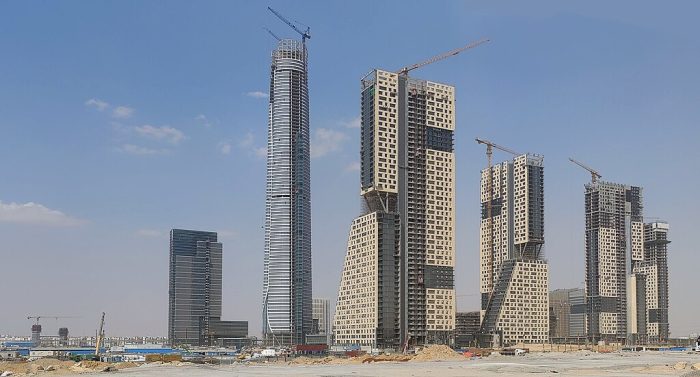
Dominating the skyline of Egypt’s New Administrative Capital is the Iconic Tower, the tallest building in Africa. The colossal structure offers a striking backdrop against the scenic desert landscape. It’s a symbol of the country’s economic ambitions and one of the best places to visit in Cairo (once it’s open to the public).
- Height: 1,300 feet
- Year built: 2018-2024
- Architect(s): Dar al-Handasah
The Great Mosque of Algiers (Djamaa el Djazaïr), Algeria

The Great Mosque of Algiers is the world’s tallest minaret. The towering religious architectural marvel uniquely blends traditional design with modern sophistication, making it both spiritual and monumental, and one of the must-visit landmarks in Algeria.
- Height: 867 feet
- Year built: 2012-2019
- Architect(s): KSP Jürgen Engel Architekten (German)
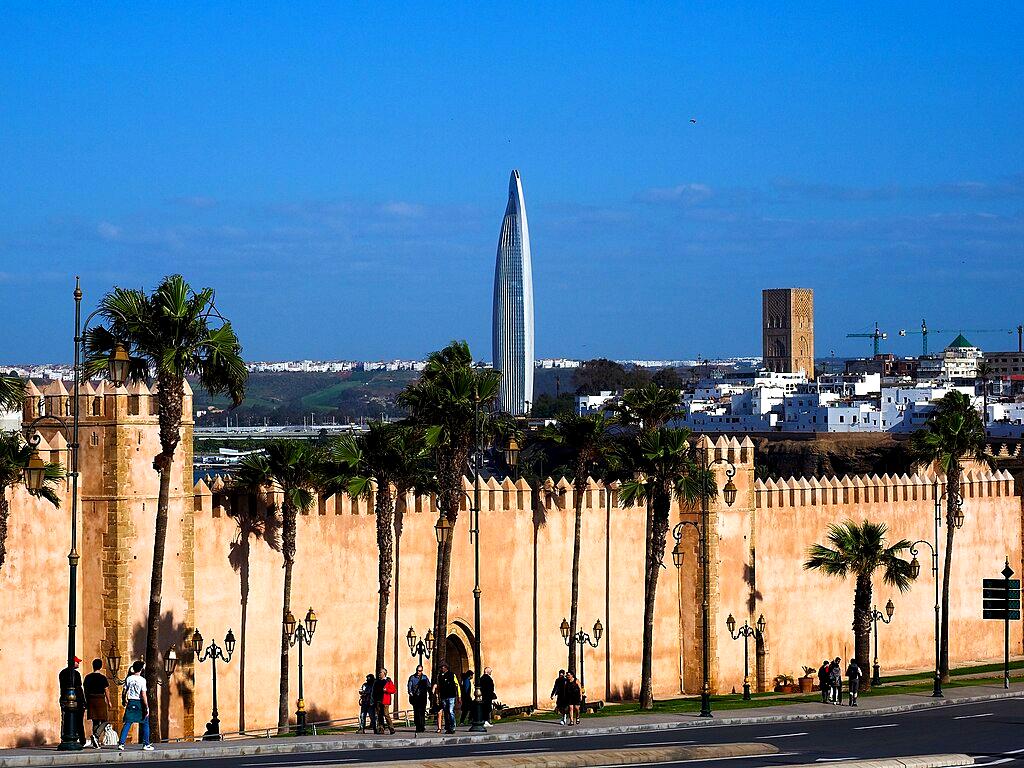
Mohammed VI Tower, Morocco

Nestled near Rabat, this skyscraper is one of the tallest buildings in Africa. It’s a symbol of modern development for Moroccans, blending traditional artistic and glocal architectural influences. Moreover, it was built to incorporate sustainable technologies, making it a worthwhile stop for eco-conscious tourists. Having invested in green architecture, it should be among the top sustainable travel destinations in Africa.
- Height: 820 feet
- Year built: 2018-2024
- Architect(s): Rafael de la Hoz Arquitectos & Hakim Benjelloun
The Leonardo, Johannesburg, South Africa
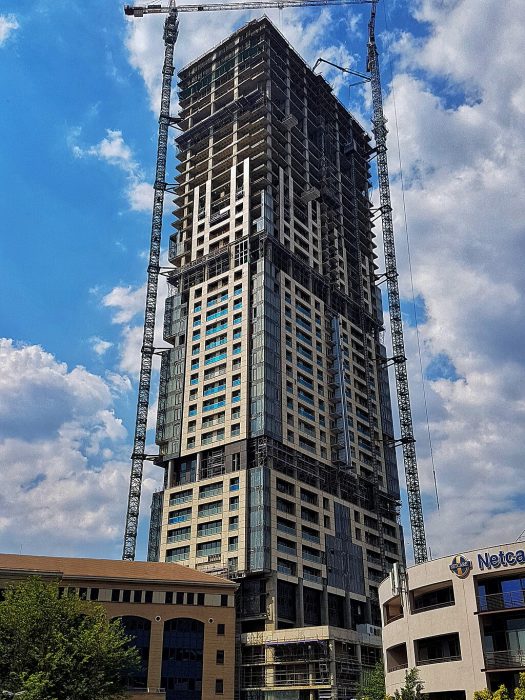
Tall skyscrapers are among the things Johannesburg is most famous for, but the Leonardo in Sandton is clearly redefining the city’s luxury and sophistication. Rising above Africa’s wealthiest square mile, it houses high-end residences, iconic, upscale restaurants, and some of the most breathtaking vistas in Southern Africa.
- Height: 768 feet
- Year built: 2015-2019
- Architect(s): Co-Arc International Architects
Carlton Centre, Johannesburg, South Africa
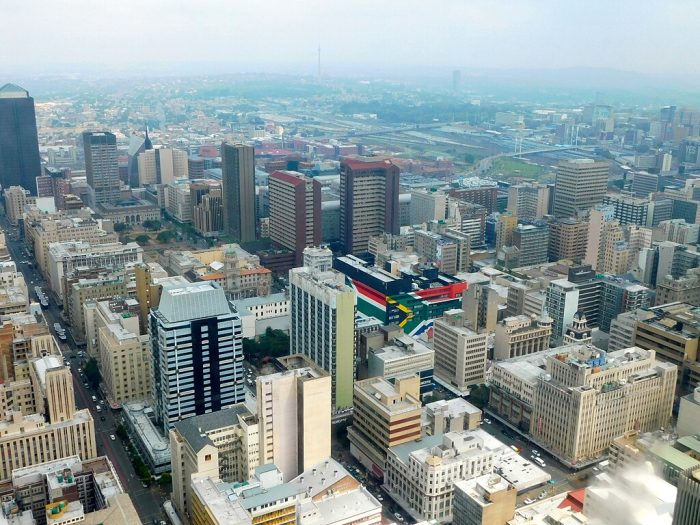
Carlton Center was Africa’s tallest building for many years. While that’s no longer the case, it’s still a historic and architectural wonder worth your time in South Africa. Located in downtown Johannesburg, on Commissioner Street, it’s one of the best examples of the early era of African high-rise buildings. Its observation deck, dubbed the Top of Africa, is a favorite viewing point for tourists.
- Height: 732 feet
- Year built: 1967-1974
- Architect(s): Skidmore, Owings & Merrill (SOM)
Commercial Bank of Ethiopia (CBE) Tower, Addis Ababa, Ethiopia
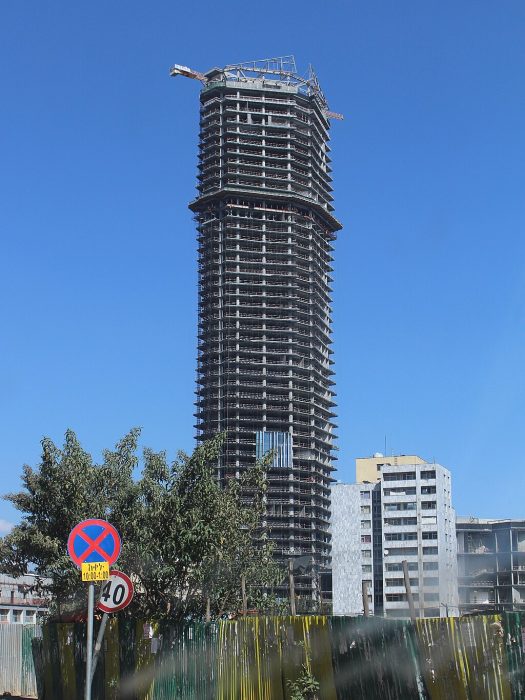
Over the years, Addis Ababa has undergone rapid economic growth, and the Commercial Bank of Ethiopia Tower stands as a testament to that transformation. It’s the centerpiece of Ethiopia’s growing financial district, and one of the tallest buildings in Africa. The building adds a refreshing mix to Addis Ababa’s architectural scene, making it a must-see landmark for vacationers.
- Height: 687 feet
- Year built: 2015-2022
- Architect(s): Henn Architekten (Henn GmbH)
Other Noteworthy Tall Buildings in Africa
While the above giants take the lead, Africa has many other noteworthy buildings that contribute to shaping its skyline scene, and therefore deserve recognition. They include
- Britam Tower, Nairobi, Kenya (656 feet)
- PSPF Towers, Dar es Salaam, Tanzania (515 feet)
- NECOM House, Lagos, Nigeria (526 feet)
- Nairobi Global Trade Centre Office Tower, Kenya (604 feet)
These towers are an iconic representation of Africa’s urban growth, and vibrant cities like Nairobi, Lagos, and Dar es Salaam invest heavily in their architecture.
Also Read: Cultural Safari in Africa: 9 Authentic Experiences For Your 2026 Vacation
Why Africa Is Rising Vertically
Growing urban populations
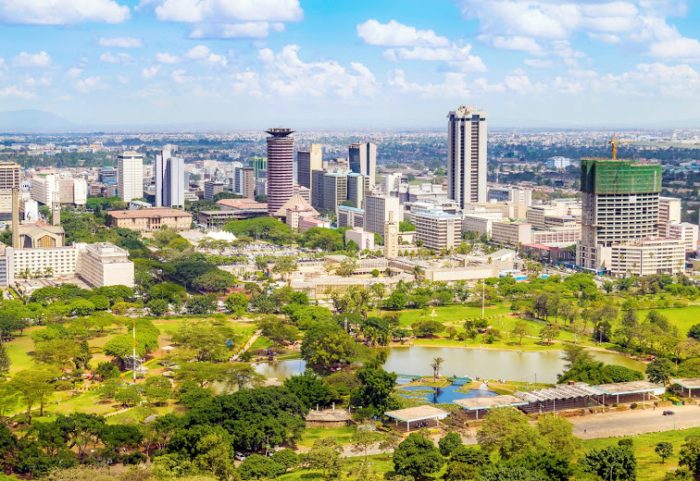
Populations in Africa’s urban areas are rapidly growing, which increases the demand for housing and amenities such as hospitals, offices, restaurants, and other essential services. This necessitates upward building to accommodate the growing number of residents.
Economic growth and development
Many African cities have experienced significant economic growth and development, with investment opportunities, robust economies, and ambitious infrastructure projects opening doors for large-scale construction projects.
International influence and global partnerships
Many of the tallest buildings in Africa and other ongoing skyscraper projects are a result of collaborations between African countries, global architectural firms, and foreign investors.
New identity and cultural pride
High-rise buildings are an iconic symbol of a city’s future. They represent economic ambitions, pride, and modernization, attracting travelers and international recognition.
What This Means for Travelers
@ngalula_willy.realestate THE ULTIMATE LUXURY LIFESTYLE DESTINATION ! The Leonardo, South Africa’s tallest building, stands in the heart of Africa’s richest square mile, Sandton, Johannesburg. Rising 234 meters from the street below, this iconic 55-story mixed-use development serves as a beacon of hope for both the city and the country. Constructed during one of the toughest economic climates, it provided countless jobs amidst high unemployment. With art taking the lead, The Leonardo supports and showcases original works of art created by some of South Africa’s established and upcoming artists. The design of The Leonardo was driven by principles of sustainable development, redefining not only the city’s skyline but also the concept of urbanism with options to work, live, and play in one place – a lifestyle all in one. #realestate #realestateinvesting #realestateinvestor #realtor #property #firsttimehomebuyer #propertymarket #homedecor #decor #design #luxurylife #properties #propertyinvestment #uxury #southafrica #luxurylifestyle sandton #propertymarket #videoviral
- New viewpoints and photo opportunities. These buildings feature observation decks and other exceptional amenities, including rooftop lounges that offer spectacular views over some of Africa’s most vibrant cities.
- More modern travel experiences. Immersive adventures, like Africa’s cultural safaris, are great, but modern travel experiences are equally essential. These buildings feature elegant hotels, high-end dining options, and impressive shopping facilities.
- A changing perception of Africa. The iconic skyscrapers help shape the perception of Africa as a destination; it’s not all about wildlife and remote experiences. The continent is also modern, thriving, and full of potential.
Conclusion
The tallest buildings in Africa are a powerful testament to the remarkable economic transformation occurring across various cities on the continent. They showcase a different side of Africa; that beyond its unmatched landscapes and cultural offerings, it’s also modern and forward-thinking.
Whether you are strolling down the streets of Nairobi or traveling across Johannesburg, these buildings allow you to see the Mother Continent from a different dimension.
Next Read: The Safest Country in Africa Is Also Its Most Beautiful Island