

Last Updated on July 7, 2026
Stretching across arid plains, rugged mountains, and semi-desert areas, Northern Kenya is one of Africa’s most impressive yet overlooked wildlife destinations. While the Maasai Mara boasts lush savannah and the world-famous Great Migration, Northern Kenya’s dramatic landscapes host animals found nowhere else on Earth.
Visiting this part of Africa is a true adventure, perfect for anyone who enjoys off-the-beaten-track travel. Discover the 6 endemic species of Northern Kenya that make it a must-visit destination for nature lovers.
The 6 Animals You Can Only Find in Northern Kenya
Grevy’s Zebra (Equus grevyi)
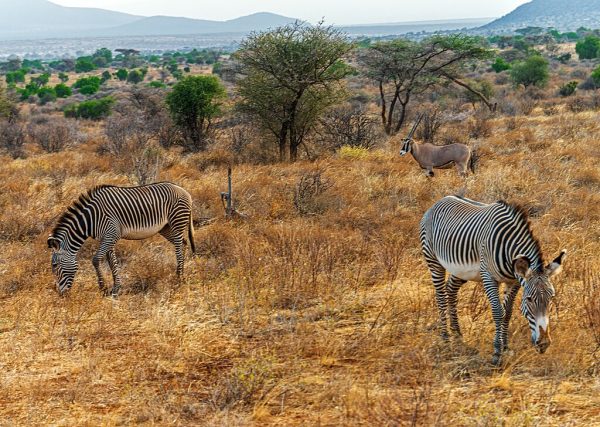
Among the ‘Northern Five’, Grevy’s zebra is the largest and rarest zebra species in Kenya. Unlike the common plains zebra, these creatures have narrow, closely spaced stripes and a white belly. They are primarily found in semi-arid grasslands and scrublands, frequently sighted in Shaba, Buffalo Springs, and Samburu National Reserves.
Behavior and Adaptation:
Grevy’s zebras are highly social but live in loose herds that change daily. They can survive in dry areas where water is scarce, relying on morning dew and occasional watering holes.
Conservation Status:
These beauties are considered endangered, with fewer than 2,000 individuals remaining in the wild. Their main threats are habitat loss and degradation, which limit food availability, and competition for water, a scarce resource. Other threats include poaching, disease, and drought.
Somali Ostrich (Struthio molybdophanes)
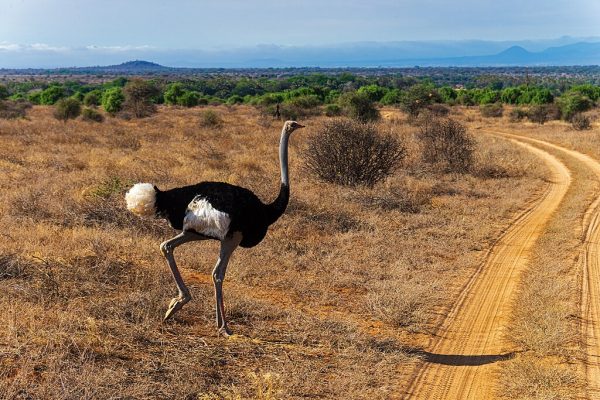
The Somali ostrich is distinct from the common ostrich, with striking black-and-white feathers and a bare blue neck. Since they are considered a part of the ‘Samburu Special Five,’ Samburu National Reserve, along with the adjacent Buffalo Springs and Shaba National Reserves, are the best places to see them. You can also sight them in Marsabit, Laikipia/Lewa Wildlife Conservancy, and Isiolo’s Ngaremara.
Behavior and Adaptation:
It’s among the world’s fastest birds, with speeds reaching 70 km/h, which helps them escape predators. They feed on seeds, shrubs, and small insects and can survive long periods without water by drawing moisture from their food.
Conservation Status:
While not critically endangered, continuous hunting and habitat fragmentation make these animals vulnerable. Northern Kenya’s conservancies are working to ensure their protection.
Also read: Africa’s Deadliest Animal May Surprise You
Reticulated Giraffe (Giraffa reticulata)
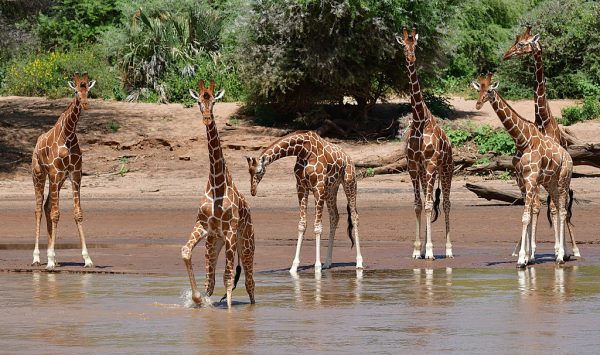
The reticulated giraffe’s geometric, polygon-shaped patches separated by brilliant white lines make it one of the most beautiful and unique giraffe species in the Mother Continent. They are highly concentrated in Samburu National Park, one of the most underrated safari destinations.
Behavior and Adaptation:
Reticulated giraffes feed primarily on acacia leaves and can grow up to 5.5 meters in height. Their long necks, which can reach up to 3 meters, allow them to browse the high-foliage acacia trees.
Conservation Status:
These endemic species of Northern Kenya have experienced significant population declines and are now considered endangered, with habitat loss and human encroachment as their main threats. Northern Kenya provides a relatively safe refuge where these rare animals can roam freely.
Beisa Oryx
Known for its unique black-and-white facial markings and long, straight horns, Beisa oryx is a large, striking antelope that thrives in the semi-desert and arid regions of Northern Kenya, with Buffalo Springs and Samburu National Reserves having the highest population.
Behavior and Adaptation:
Beisa oryx can survive long periods without water, making them ideally suited to desert life. They graze mainly on grasses and shrubs and are primarily active in the early morning and late afternoon to avoid the heat.
Conservation Status:
They are listed as endangered on the IUCN Red List, with hunting, habitat destruction, and competition with livestock as significant threats to their survival. Conservancies and national reserves play a key role in maintaining their habitats.
Gerenuk (Litocranius walleri
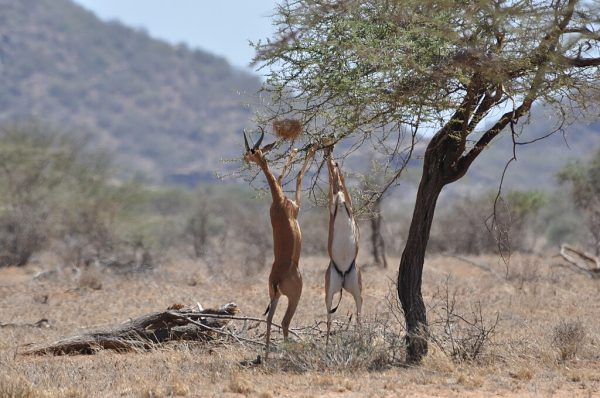
Gerenuks, which translates to “giraffe gazelles,” are an enchanting antelope species, recognised for their slim, medium-sized nature and long necks. They feed on leaves, flowers, and shoots high in bushes, which most other grazers cannot reach.
Behavior and Adaptation:
Thanks to their long necks and ability to stand on their hind legs, they can reach high-foliage vegetation of up to 2 meters high; they’re basically ‘miniature giraffes’. Their long legs and alert nature help them defend themselves against predators on the open plains.
Conservation Status:
Gerenuks are considered near-endangered, with habitat loss, poaching, and competition with livestock as the key threats. Northern Kenya’s semi-arid shrublands are among the few places where they can feed and live freely and safely.
Northern Kenya Sand Cat (Felis margarita)
The sand cat is a small wildcat that thrives in desert regions and is notoriously difficult to spot. Most cats avoid harsh environments; this is the only one that thrives in true deserts. It features large ears and thick fur, which help it survive the extreme temperatures.
Behavior and Adaptation:
Sand cats are nocturnal hunters that feed on rodents, insects, and reptiles. They are highly adapted to desert life, able to go without water for long periods by obtaining moisture from their prey.
Conservation Status:
Sand cats are rarely seen because of their nocturnal habits and camouflaging fur. Sightings are considered a special reward for wildlife enthusiasts and photographers.
Why Northern Kenya Is Special for Wildlife
Northern Kenya stands out for its dramatic and extreme landscapes. Unlike many other parts of the country, it is sparsely populated and far less crowded, offering visitors a more intimate and authentic wildlife experience.
The lower human population density reduces conflict between people and wildlife, allowing wildlife to move freely across vast, open territories.
Much of the region’s tourism is community-led, with many conservancies managed by local communities. This makes the area an ideal destination for eco-conscious travelers seeking to enjoy sustainable travel in Africa.
Together with established wildlife reserves, these locally managed conservancies play a vital role in protecting the habitats of the endemic species of Northern Kenya.
The region’s unique mix of deserts, savannahs, river valleys, and volcanic mountains also creates diverse microhabitats that support these rare species.
Tips for Seeing The Animals You Can Only Find in Northern Kenya
- Best time to visit. The dry seasons from June to October are ideal for wildlife spotting. Animals gather around water sources, making sightings effortless.
- Hire local guides. Guides have expert knowledge of these fantastic creatures, from their patterns to their habitats and secret spots.
- Plan for early mornings and late afternoons. Most wildlife is active during these hours. You won’t spot them easily at midday because they’re often resting in the shade.
- Bring binoculars and cameras. Because most of these animals, like sand cats, are elusive, binoculars and a camera can make a world of difference.
- Respect wildlife and habitats. Always be a respectful traveler; keep a safe distance, avoid loud noises, and don’t feed animals. Responsible tourism helps preserve these rare species for future generations.
The endemic species of Northern Kenya showcase the incredible adaptability and diversity of life in Africa’s northern frontiers. A visit to this region offers more than a Kenyan safari; it’s a rare opportunity to witness some of the continent’s most extraordinary creatures in their natural habitats.
Next Read: 13 Most Beautiful Places in Africa to Visit At Least Once